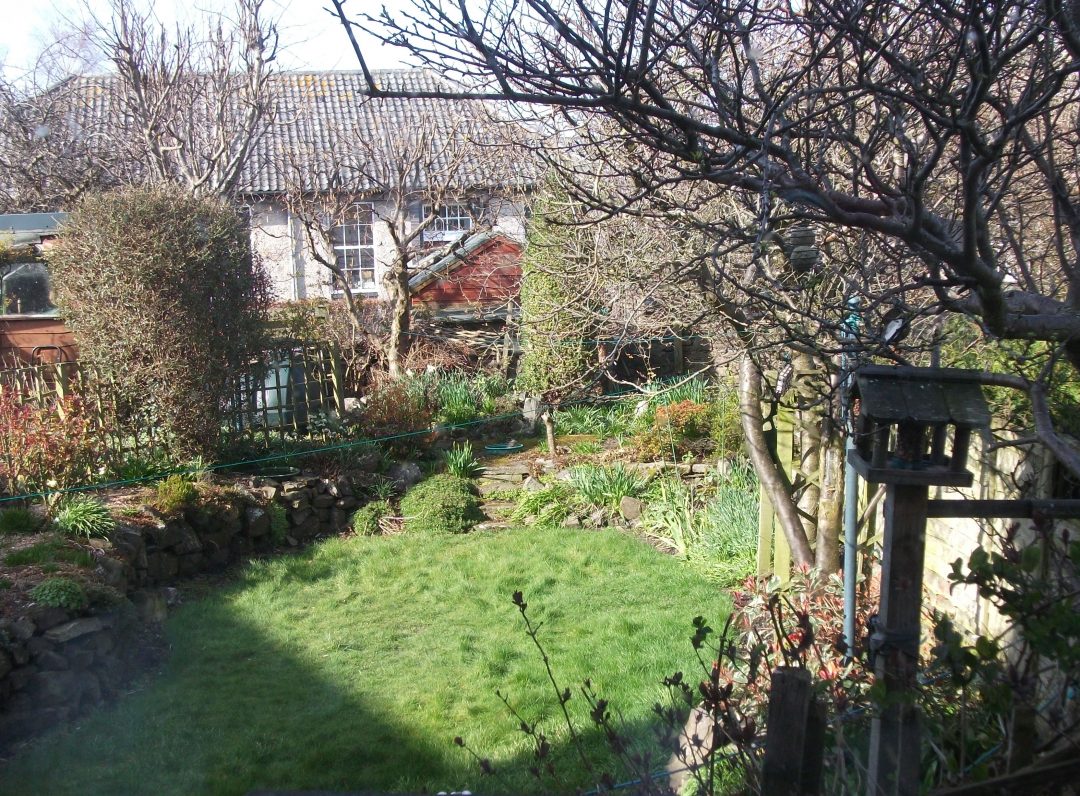
This morning the grass was crowded with the usual flock of birds large and small. This seed mix, with a variety of seed sizes and some larger suet pieces, attracts different species at different times. The bigger birds, the ring doves, often called collared doves in the books, and wood pigeons are amongst the first arrivals, picking out the suet morsels, whilst the sparrows, chaffinches, siskins and all those little brown birds that haven’t decided what they want to be yet, weave around their feet. This cannot last and as soon as a group of jackdaws descend to strut about the lawn and hoover up anything they fancy, the little birds disappear. The doves become twitchy, but the wood pigeon is untroubled.
Normally, I only intervene in the case of a hunting cat, but the jackdaws are unwelcome and know it, not only because a mob of them perched amongst the golden catkins on the hazel tree look rather macabre. We’ve eventually come to an understanding. By this time, I have only to open the kitchen window and hiss at them and they flee and not simply to the nearest roof. The doves flounce away, but do not go far and are soon returned along with the small birds. The wood pigeon? It barely flinches, might lift its head to wonder why it is now alone, before returning to graze. In Glasgow we would call it ‘gallus’, meaning ‘bold’, but it might simply be that it’s so fat that it can’t lift off with any degree of alacrity.

 thekitchensinkbirdwatcher