‘How many sparrows can you get into a water tray?’
When I scatter the feed in the morning, there are usually a few birds that will be down on the grass to investigate it before I’m even at the top of the steps up to house level and there are some that seem to wait for the click, as I turn the key in the lock of the sunroom door – so old now that it needs to be locked to hold shut – before emerging into the light. This morning there is a solitary ring dove, a quartet of chaffinches, three sparrows and one robin. I think the robin is the plump little female and later on in the day, I’ll glance out and see the tall, sleek, male rummaging around in the litter at the base of the stone wall.
‘There are at least three in the smaller tray, but one is far more energetic than the other two, or perhaps they are simply enjoying the excess water that the first is flinging about and don’t see the need for any more exertion.’
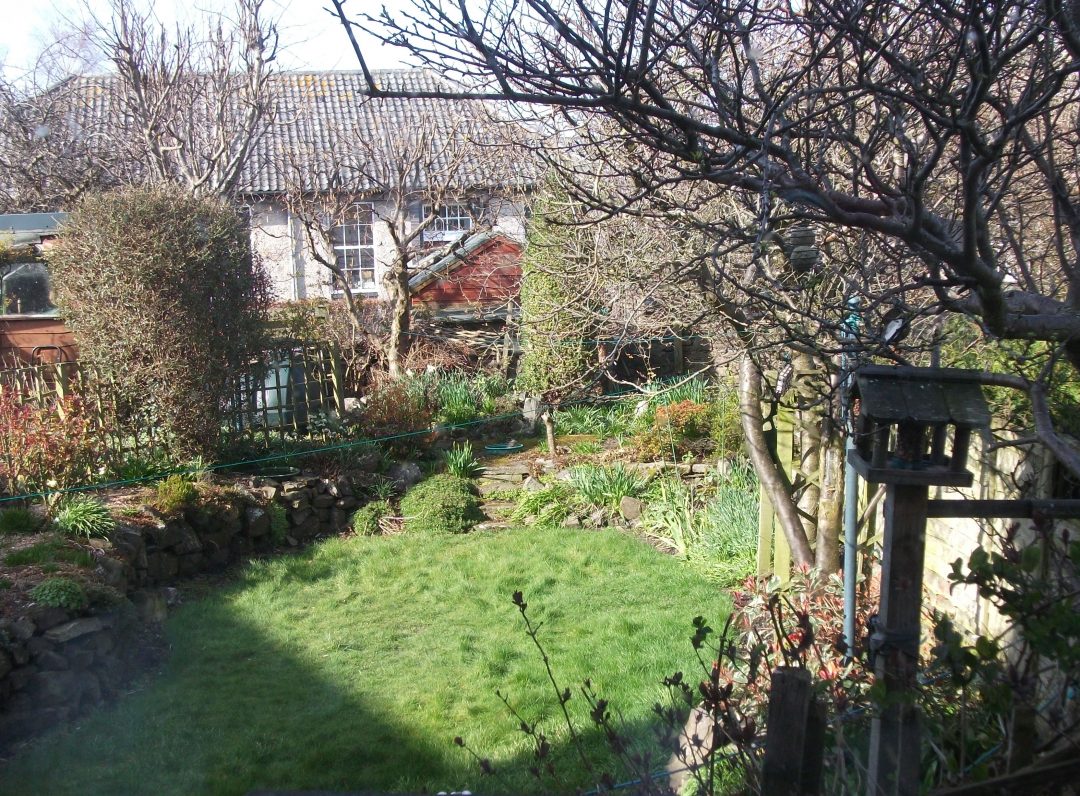
The ring dove on the grass, is the same, solitary bird, that has taken to sitting on the wooden fence that divides the rosebed from the vegetable and fruit plot. There is part of it that catches the morning sun far more than the rest of the fencing, and rather than sit on the neighbour’s higher fence, which is a favourite patrolling line of the cats, this bird has decided that perching alternately on the fence and on a branch of the cherry tree, gives it the best vantage point to see when and where the food is scattered. Very efficient.
‘The blackbird had a very distinctive technique and rhythm to his bathing. This energetic sparrow has evolved a different method of ensuring that he is thoroughly wet by the time he hops back onto the rim of the tray and shakes himself. The blackbird favoured a dip head/three or four beats of wings pattern, whereas the sparrow does a modified ‘hummingbird’ or butterfly stroke. He flaps his wings continuously, setting up a heavy spray and occasionally dips his head into the water, whilst not stopping the wingbeats. I’m waiting for the bird that tries a front crawl.’

 thekitchensinkbirdwatcher